Sunday, 17 March 2013

Week 27 - Ireland

JUMBO BREAKFAST ROLL

Happy St. Patrick's Day!  And what better way to get the fun started than with the Irish Jumbo Breakfast Roll.

The Breakfast Roll is ubiquitous in Ireland as a quick breakfast for construction workers, students and anyone eating brekkie on the go.  They're commonly found at gas stations, convenience stores, supermarkets and newsstands.  An ingenious idea really, the Breakfast Roll takes the epic Fry-up and sticks it all on a demi-baguette for easy eating.

A product of the Celtic Tiger construction boom (1995-2008), the Breakfast Roll  has become so associated with Irish pop culture that it spawned a hit song!


For our version of the Breakfast Roll we fried up some hashbrowns, breakfast sausage, bacon, eggs, tomato and a side of baked beans.  (The real Irish Breakfast Roll would probably also have black or white pudding and a generous dollop of ketchup or brown sauce.)


This is one hearty breakfast.  In fact, we were only able to make it through half a sandwich each.  According to internet sources, a whole sandwich averages well over 1000 calories!  It was definitely satisfying, but I found it difficult to enjoy all the different taste sensations going on at one time.  When I'm eating bacon, I want to be able to enjoy the awesomeness that is bacon, you know? (So maybe not worth all those calories.)

The Verdict:

For Ease of Preparation:


Although it takes some juggling to make sure everything is ready at the same time, it only took about 20 mintues to prepare the Breakfast Roll.

For Degree of Separation:


For Guestability:


More an on-the-go food, I wouldn't recommend serving this one to guests.  It would be akin to serving take-out McDonald's McMuffins.  (In fact, I read a rumour that Irish McDonald's actually has a version of the Breakfast Roll on their menu.)

For Sustainability:


Bam!  This is one hearty breakfast, worthy of a "Hungry Man" breakfast.

For Costability:


If you pick one of these in Ireland, it'll set you back around $5 Cdn.  Making one at home was a bit more, about $20 in groceries.  (This buys enough to make several servings.)

For Overall Appeal:


The Breakfast Roll was pretty good, but didn't knock my socks off.  As an on-the-go option it would be awesome, but as an at home meal, it was not as interesting.  The flavours became too muddled together for my taste.

Next time we'll get to that Iran breakfast, stay tuned....


Friday, 15 March 2013

Week 26 - Desayuno - Aruba

PASTECHI

I'm a little embarrassed to admit that before researching this breakfast all I knew about Aruba was that it was in the Caribbean somewhere and featured prominently in the Beach Boy song Kokomo.  I now know that Aruba is off the Venezuelan coast, is part of the kingdom of the Netherlands (sorry no Hagelslag to be found), and has an utterly delicious breakfast treat - the Pastechi.

Pastechi can be found all over Aruba as a roadside breakfast snack (like Canada's Timbits), and have a few variations.  You can enjoy the Pastechi di Keshi (with Cheese), the Pastechi di Pisca (with Seafood) or the Pastechi di Carni (with Beef, spices and often, the dreaded raisin).  I felt like I'd put Jon through quite enough in the last couple of breakfasts, so I settled on the Pastechi di Keshi.


Pastechi are really just another variation on the world's most common handfood - the turnover.  When you think about it everybody has some variation on the handy dough pocket filled with delicious goods:  Eastern Europe has perogies, Asia has Mandu/Gyoza/Dumplings, South America has Empanadas, India has Samosas, etc.  So Aruba and some of the neighbouring islands have Pastechi, a light pie-like pastry that is filled and deep-fried.

And since Aruba has a large Dutch influence, what other cheese is used but Gouda (preferably smoked).  I haven't had a lot of Gouda experience, so was very happy to discover that I loved it.  It was creamy, salty and just perfectly.... cheesy.


The whole Pastechi package together was very satisfying.  I was scared the deepfrying might make the dough stodgy but in fact they were light and delightfully crispy (though the cheese did tend to escape).  And they certainly were "addictive" as I read on other web-sites.

The Verdict:

For Ease of Preparation:


Deep-frying first thing in the morning is always a little scary.

For Degree of Separation:


For Guestability:


I think that I would only make this again for guests.  Too much work for just two people, but they would be a hit with company.  Who doesn't love deep-fried cheese?

For Sustainability:


We certainly were full, in a, "Oh my goodness, did we really just eat that entire tray?" kind of way.

I'd like to take a moment to introduce a new category in The Verdict, "Costability".  This is a simple rating of how pricey the breakfast was to make.  Please keep in mind that this is very subjective to my location and certain ingredients may be cheaper/more expensive where you are.  I've decided to include this because I've found vast differences in the grocery costs and I think it's really interesting.  For example, Japanese breakfast at over $60 (!) was by far one of the most expensive, while Ethiopian at well under $5 was the cheapest.

Costability:


A relatively inexpensive breakfast.  The turnover itself used simple ingredients I had available in my pantry.  Gouda was the only item I needed to purchase.

Overall Appeal:


I'm always super excited when a previously unknown food turns out to be the bee's knees!  Pastechi you were a great find.

For something altogether different, next time we check out breakfast in Iran....


Saturday, 9 March 2013

Week 25 - Colazione - Italy

BOMBOLONI and CAFFE LATTE

Italian food is arguably the most popular cuisine in the world.  Even when we lived in Korea, eating Italian was considered romantic and chic.  So I have been very excited to try Italian breakfast.  And, (drum roll), it didn't disappoint!

Breakfast in Italy is an entirely sweet affair.  No savoury foods to be found here.  In fact, most of the foods that they eat for breakfast I would normally consider to be dessert:  cookies, biscotti, donuts, some people even report that they eat gelato!  Sounds like my kind of breakfast but I was left thinking that it couldn't possibly be true...

Enter Exhibit A:


I found these Italian Breakfast Cookies at a Walmart located in one of Toronto's largest Italian communities.  Here's what it said on the back:


So I had proof, Italians really did eat cookies for breakfast.  But a dry plate of cookies didn't seem like a very fun entry, so I upped the ante and went to see what I could find at an Italian bakery.


Eating breakfast out at a local Caffe is very common in Italy.  Locals grab a Caffe Latte or Cappuccino and a sweet and most often without even grabbing a seat, they're on their way.  (As a sidenote, apparently the frothy Cappuccino is considered a morning beverage only.)


To best emulate this experience in Toronto we headed to Francesca Bakery, an Italian bakery I've been dying to try for a long time.


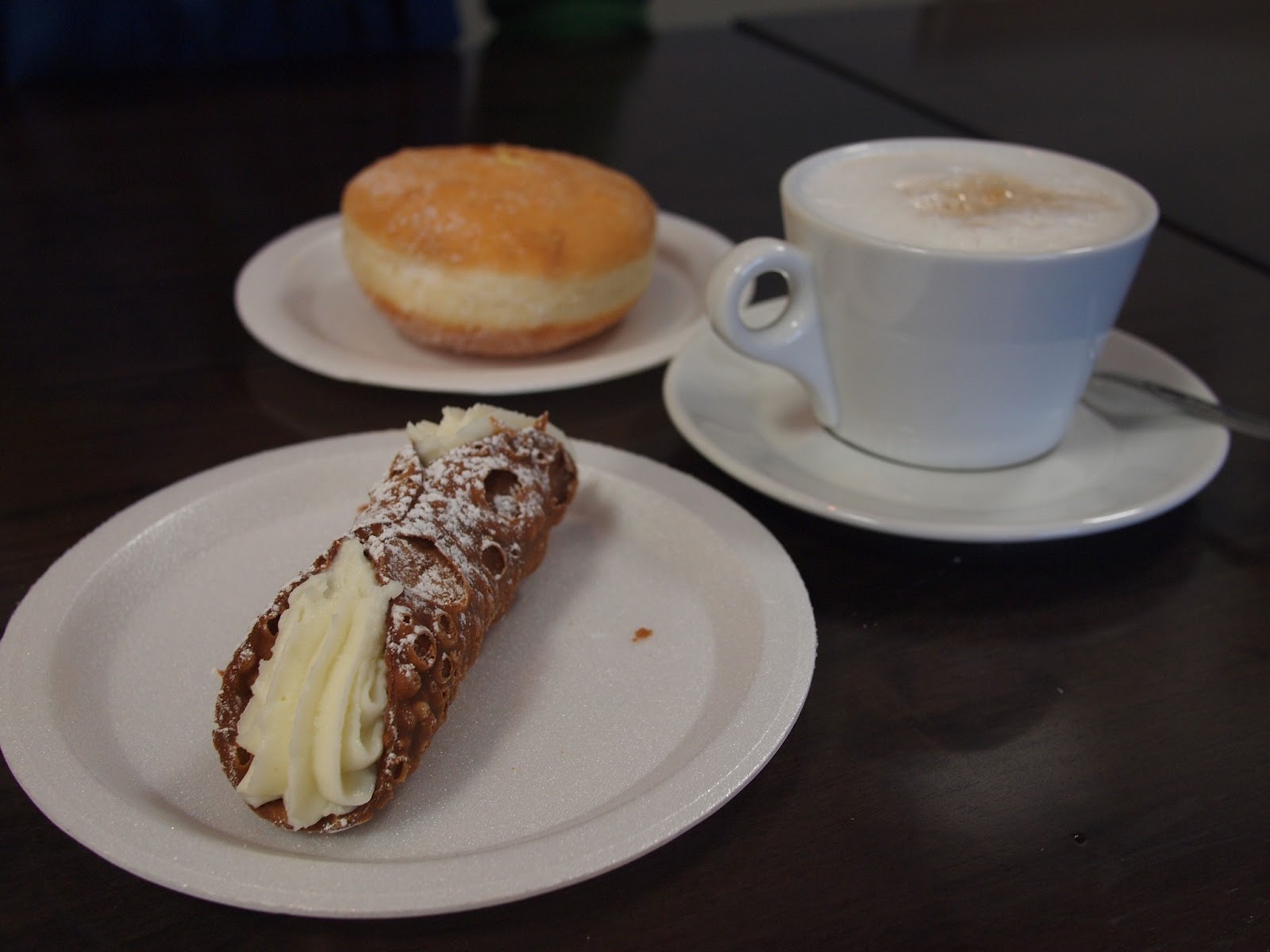
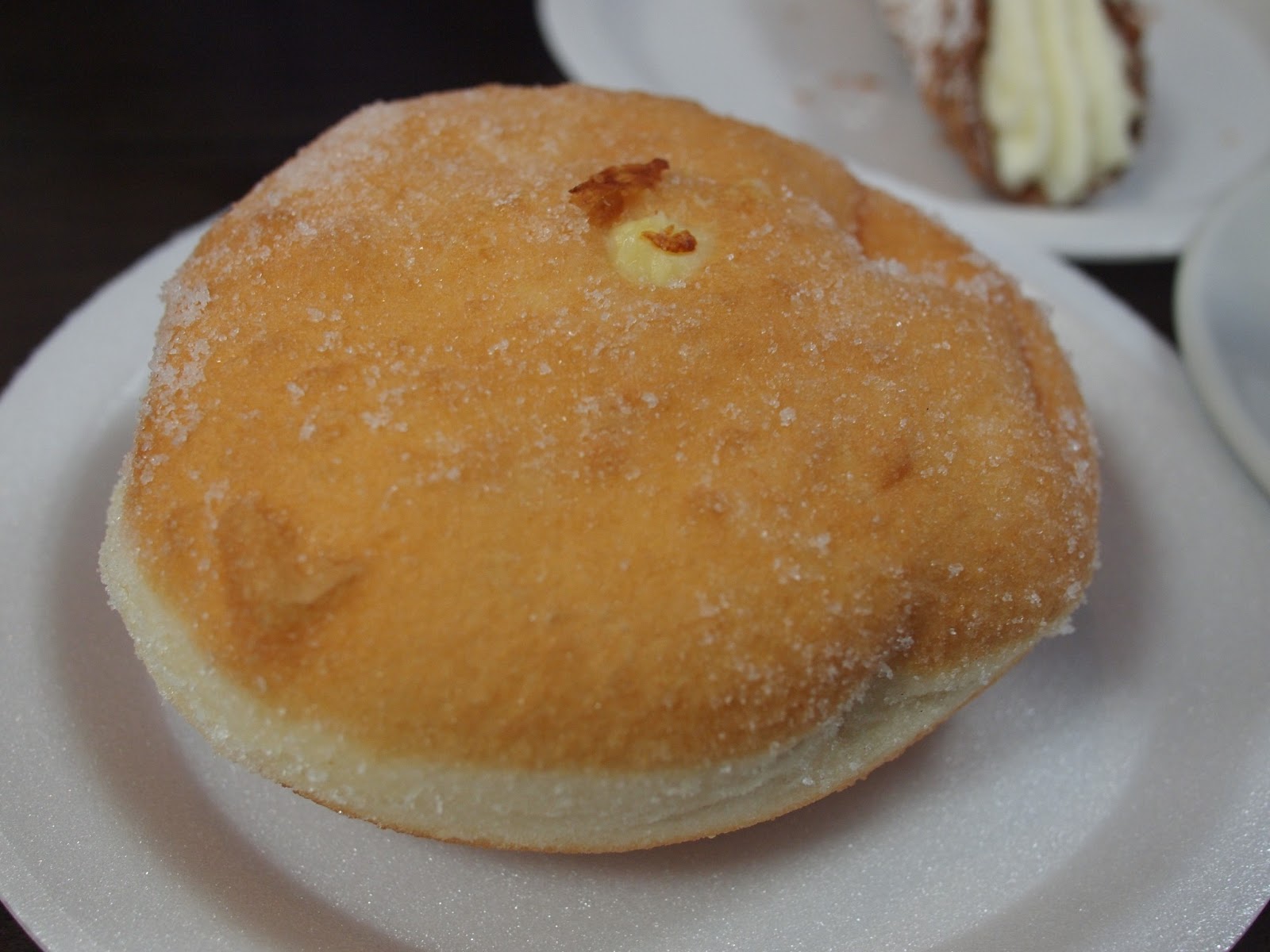
Jon had a Caffe Latte and Cannoli (one of Francesca's specialties) and I absolutely devoured a Bombolone.  A Bombolone is a sugar coated yeast doughnut stuffed with creamy vanilla custard.  It is one of the most classic of Italian breakfast treats and it was delectable.  I love stuffed doughnuts in general because they feel so much more substantial and the custard in the Bombolone really hit the spot.

The Verdict:

For Ease of Preparation:


For Degree of Separation:


For Guestability:


For Sustainability:


Confession:  we also had two enormous cheese and stew stuffed Arancini, so this category was compromised.  (It was worth it, Francesca's Arancini were amazing.)

For Overall Appeal:


I could eat dessert for every meal, so Bombolone and Cannoli appealed to me.  Not so sure about those dry breakfast cookies...


Tuesday, 12 February 2013

Week 24 - 설날 - South Korea

TTEOKGUK

Happy Lunar New Year!

Today I'd like to write a bit about the Korean holiday of Seollal (the Korean Lunar New Year).  Like most of Asia, Korea celebrates not only the Solar New Year on January 1st but also (and with bigger celebrations) the Lunar New Year.  This year the Lunar New Year fell on February 10th, and since celebrations last for three days, that right near the end of the celebrations today.

Activities during Seollal are much like most holidays in the world - families get together, gifts are given, food is eaten and games are played.  What we're concerned with of course is the food.


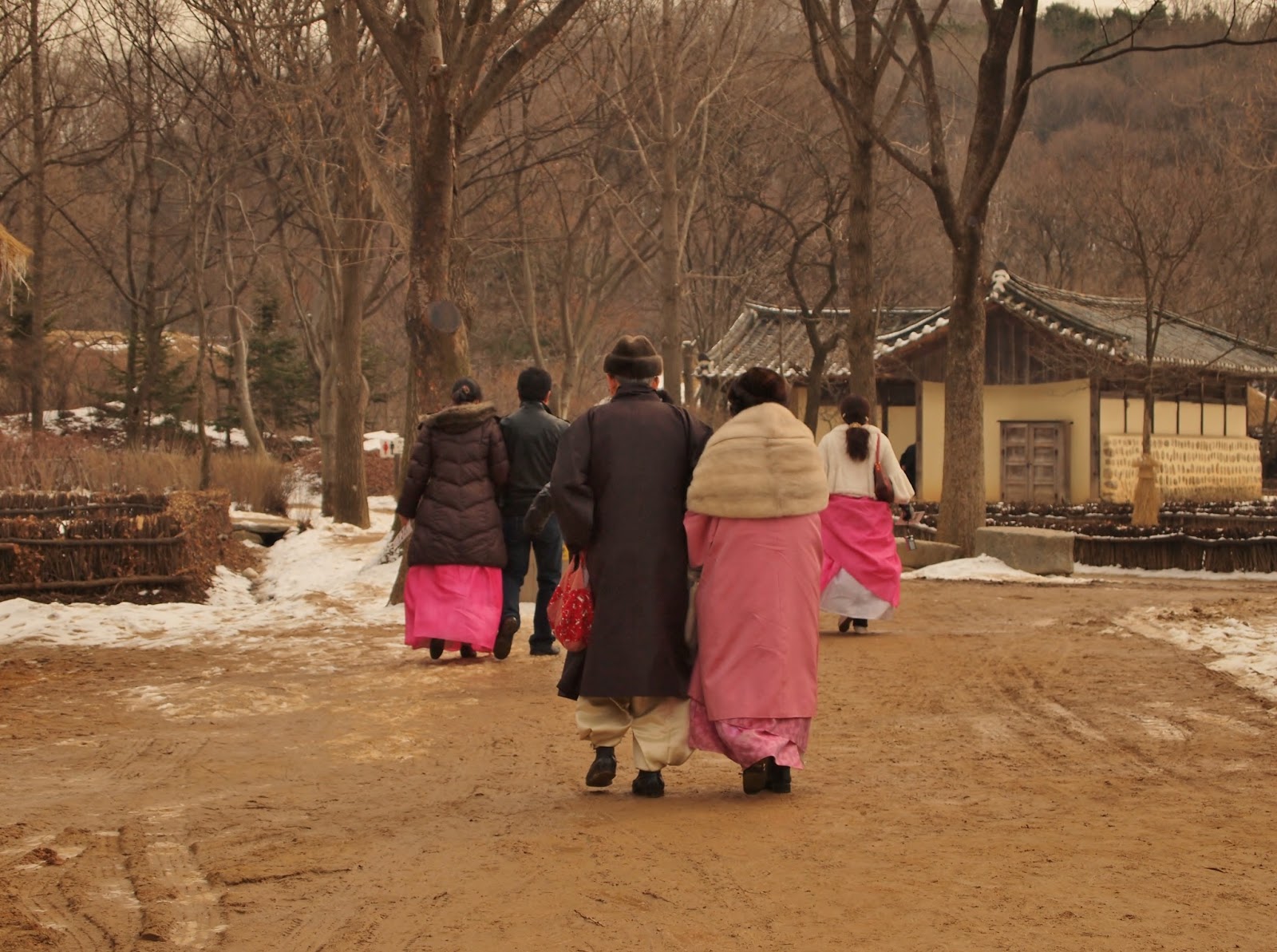
On the first day of Seollal it is traditional for Koreans to dress in their Hanbok (traditional Korean attire, see picture of me to the right) and pay respect to their ancestors by bowing and presenting ritual foods.  After this they eat the traditional breakfast of Seollal, Tteokguk (rice cake soup).  Eating this soup is very important to the New Year proceedings as eating a bowl on New Year's morning is believed to add a year to your age.  It is so integral that a common New Year's greeting is, "How many servings of Tteokguk have you had?" (Having more than one bowl is actually common.)


Tteokguk was never a favourite of mine, probably because I couldn't wrap my head around the Korean Rice Cake.  Far different from the Western incarnation of a Rice Cake, Korean Tteok is actually made by pounding cooked rice into oblivion and then reforming it into solid shapes (kind of like an Asian pasta).  It's used for sweet and savoury dishes and is a common ingredient in Korean cuisine.  As for flavour, there really is none, it was the texture that got me.  I'm a big texture girl and Tteok is rubbery, gummy, and slippery all rolled into one.  Not my thing.

But lucky for my breakfast blog, Jon loves Tteokguk!  In fact, whenever we go for non-BBQ Korean food he orders Tteokmanduguk, which is just Tteokguk with Mandus (pork dumplings) thrown in for fun.


Tteokguk is made from a beef broth, boiled with tteok and features seaweed and egg as toppings.  For our feature on it we decided to go out (since I was not interested in having gallons of Tteokguk left-over...) to a classic kind of Korean establishment.  In Korea, you pick your restaurant by what you want to eat that night.  You want BBQ Beef, you go to the BBQ Beef restaurant, Pork, the Pork restaurant etc.  However in every town (and I mean probably every), there will be a cozy place that serves an assortment of cheap and cheerful Korean food.  Most dishes will be under 5000 won (or $5) and might include Kimbap (think Korean sushi), Ramen, Mandu, and an assortment of Guk (soup).  Our favourite haunt like this in Toronto is called Thumbs Ups and is pretty authentic, down to the dishware and the cute frilly aprons on the teenage boys serving.


I'm going to break my rules here and forgo the Verdict, because well, I didn't eat any soup. Oh no!  I didn't gain a year.  Ha ha!  Now Jon and I may finally be the same age.....

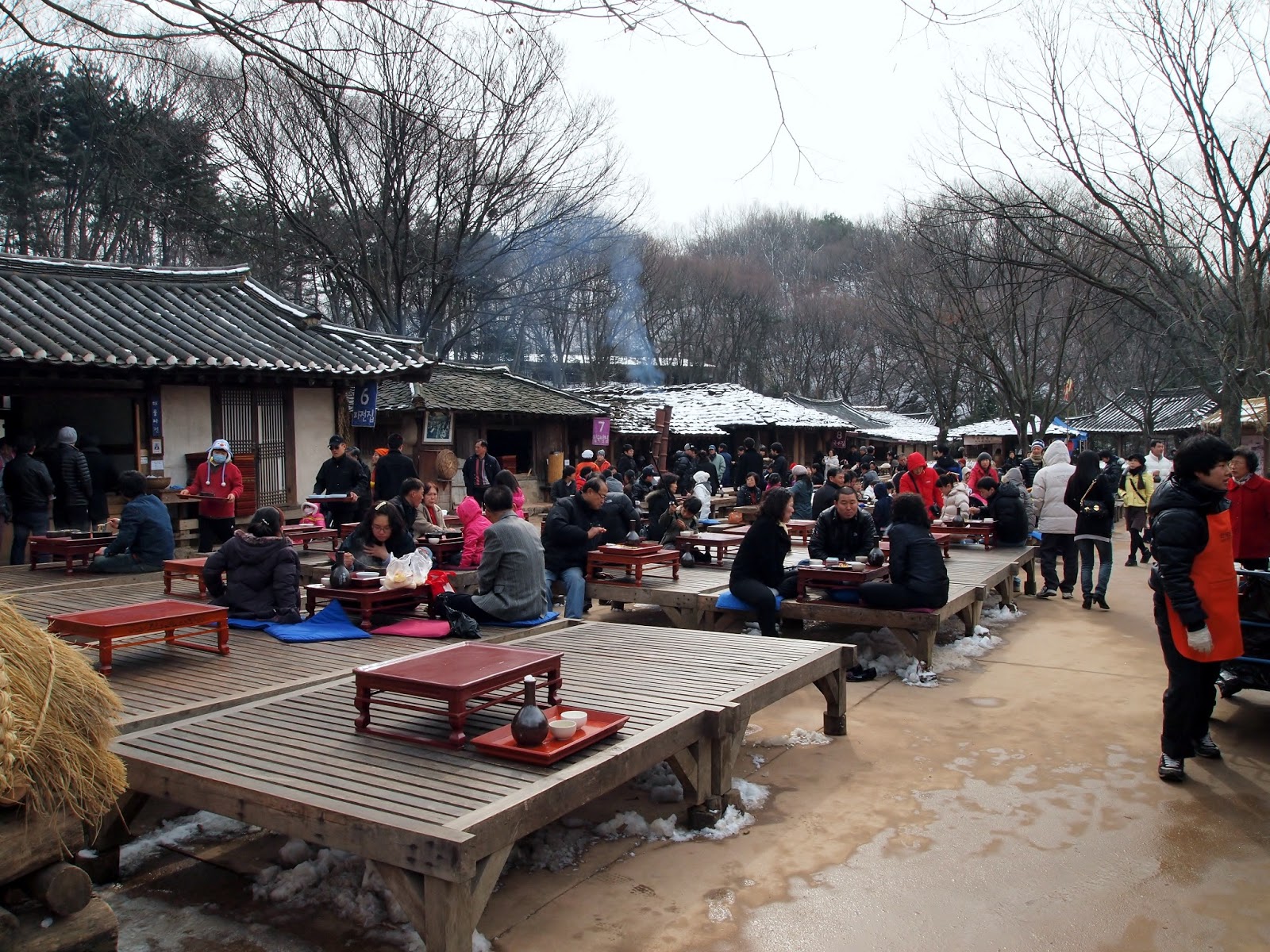
Instead please enjoy some pictures taken from our time in Korea around the holiday of Seollal (we visited the Korean Folk Village):


The following pictures were taken in Busan a couple of weeks into the New Year. The bonfire is celebrating Daeboreum, or the first full moon of the New Year.  When we waited in line to watch this we had no idea what we were in for.  The bonfire was extremely intense with ash and cinders flying all over the place.  The whole ceremony took several hours and included speeches from dignitaries, singing, some very beautiful traditional dancing, and much prayer and excitement when the Full Moon finally rose...


Thanks for indulging me in a little trip back to our wonderful time in Korea.

Next time, we'll see what's happening for breakfast in Italy!


Sunday, 10 February 2013

Week 23 - Egypt

FUL MEDAMES

Ful Medames may be the most ancient breakfast I've come across.  A simple dish made by stewing fava beans, olive oil, garlic, lemon juice, onion and parsley, evidence of man eating a version of this have been discovered in Neolithic ruins!  (That's from as far as back as 10,000 BC.)  Whoa.

It was also one of the most surprisingly tasty breakfasts I've made.  Some, like the upcoming Bomboloni donut from Italy I expect to love.  Mashed beans with garlic and onion?  I wasn't expecting much.  But apparently, thousands of years of history and millions of people across several countries, (Ful Medames is enjoyed not only in Egypt but in Sudan, Eritrea, Ethiopia, Saudi Arabia, Syria, Somalia, etc.) aren't wrong.  Simply put - Ful Medames was delicious.

There's a lot to be said about the history of Ful Medames - apparently the fires that kept the bath waters of ancient Egypt warm also did double duty cooking breakfast for the citizens.  But I'm no Egyptologist, so let's just get to the actual food.

 Ful Medames is a dish that traditionally takes hours and hours to simmer away in a pot.  But I cheated by using a can of Ful I had purchased from the amazing ARZ Fine Foods Grocery store in Toronto.  Preparing the Ful Medames was as simple as sauteeing the garlic and onion until soft, adding the beans to simmer until hot, and then slightly mashing everything together.  The final product was garnished with lemon juice, olive oil and parsley and served with pita and a Mediterranean salad.


It didn't look the prettiest but was quite addictive.  We polished off the whole recipe and since then I've found myself wishing I had more...


For Ease of Preparation:


For Degree of Separation:


For Guestability:


"Come and get it!  I cooked you up some beans 'n garlic!"  Maybe not.

For Sustainability:


This would get a perfect five except it's addictive quality just left me wanting more.

For Overall Appeal:


Ful Medames deserves it's long-standing popularity.  Not only did it taste great, I suspect it was also highly nutritious.  Nutritious, delicious, and ease to prepare - it's the breakfast cook's Triple Crown.

As many of you know today is the first day of the Lunar New Year.  Happy Year of the Water Snake!  To celebrate, I'm working on a special edition all about Seollal - South Korea's lunar year festivities.