Tuesday, 12 February 2013

Week 24 - 설날 - South Korea

TTEOKGUK

Happy Lunar New Year!

Today I'd like to write a bit about the Korean holiday of Seollal (the Korean Lunar New Year).  Like most of Asia, Korea celebrates not only the Solar New Year on January 1st but also (and with bigger celebrations) the Lunar New Year.  This year the Lunar New Year fell on February 10th, and since celebrations last for three days, that right near the end of the celebrations today.

Activities during Seollal are much like most holidays in the world - families get together, gifts are given, food is eaten and games are played.  What we're concerned with of course is the food.


On the first day of Seollal it is traditional for Koreans to dress in their Hanbok (traditional Korean attire, see picture of me to the right) and pay respect to their ancestors by bowing and presenting ritual foods.  After this they eat the traditional breakfast of Seollal, Tteokguk (rice cake soup).  Eating this soup is very important to the New Year proceedings as eating a bowl on New Year's morning is believed to add a year to your age.  It is so integral that a common New Year's greeting is, "How many servings of Tteokguk have you had?" (Having more than one bowl is actually common.)


Tteokguk was never a favourite of mine, probably because I couldn't wrap my head around the Korean Rice Cake.  Far different from the Western incarnation of a Rice Cake, Korean Tteok is actually made by pounding cooked rice into oblivion and then reforming it into solid shapes (kind of like an Asian pasta).  It's used for sweet and savoury dishes and is a common ingredient in Korean cuisine.  As for flavour, there really is none, it was the texture that got me.  I'm a big texture girl and Tteok is rubbery, gummy, and slippery all rolled into one.  Not my thing.

But lucky for my breakfast blog, Jon loves Tteokguk!  In fact, whenever we go for non-BBQ Korean food he orders Tteokmanduguk, which is just Tteokguk with Mandus (pork dumplings) thrown in for fun.


Tteokguk is made from a beef broth, boiled with tteok and features seaweed and egg as toppings.  For our feature on it we decided to go out (since I was not interested in having gallons of Tteokguk left-over...) to a classic kind of Korean establishment.  In Korea, you pick your restaurant by what you want to eat that night.  You want BBQ Beef, you go to the BBQ Beef restaurant, Pork, the Pork restaurant etc.  However in every town (and I mean probably every), there will be a cozy place that serves an assortment of cheap and cheerful Korean food.  Most dishes will be under 5000 won (or $5) and might include Kimbap (think Korean sushi), Ramen, Mandu, and an assortment of Guk (soup).  Our favourite haunt like this in Toronto is called Thumbs Ups and is pretty authentic, down to the dishware and the cute frilly aprons on the teenage boys serving.


I'm going to break my rules here and forgo the Verdict, because well, I didn't eat any soup. Oh no!  I didn't gain a year.  Ha ha!  Now Jon and I may finally be the same age.....

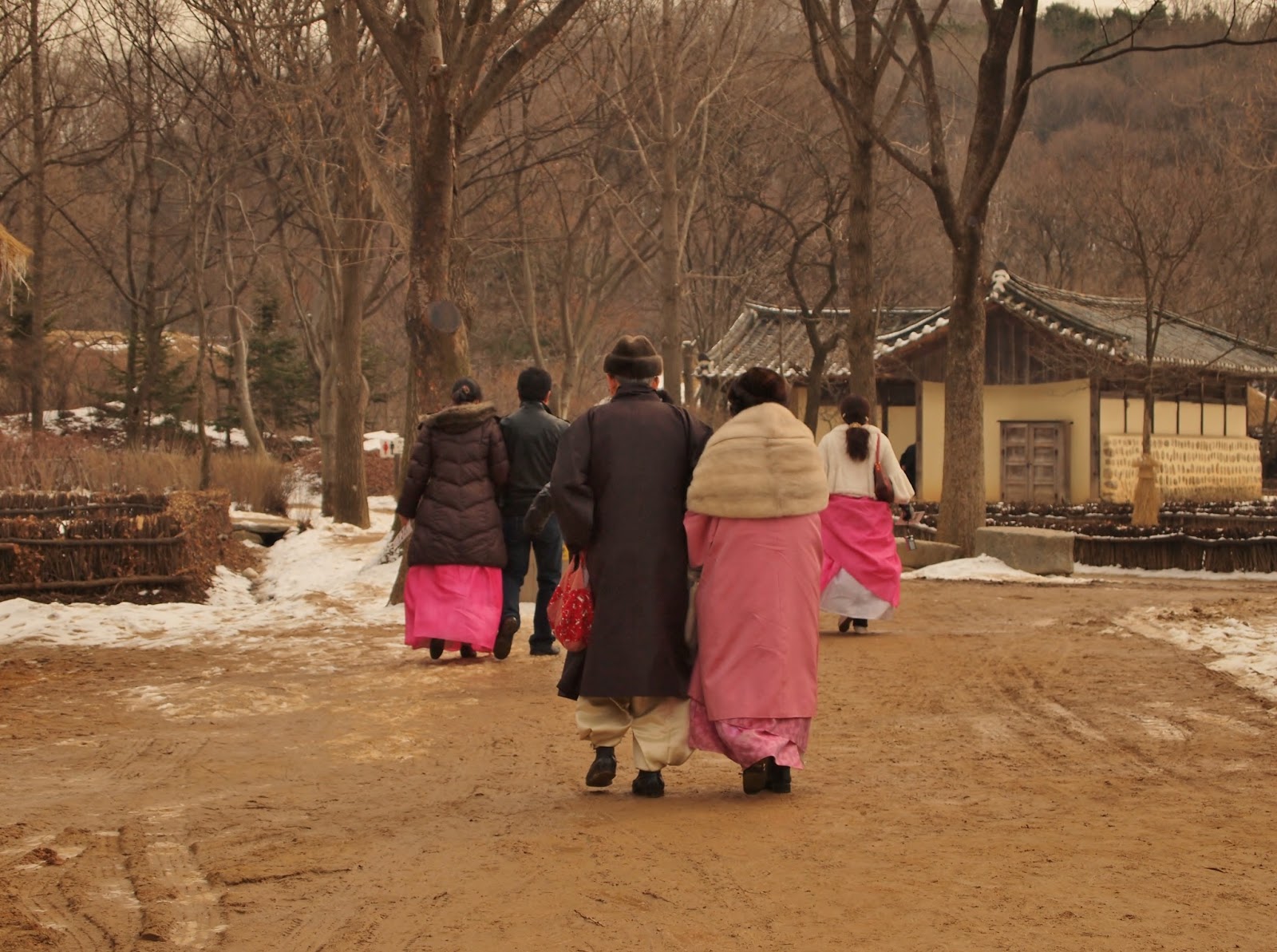
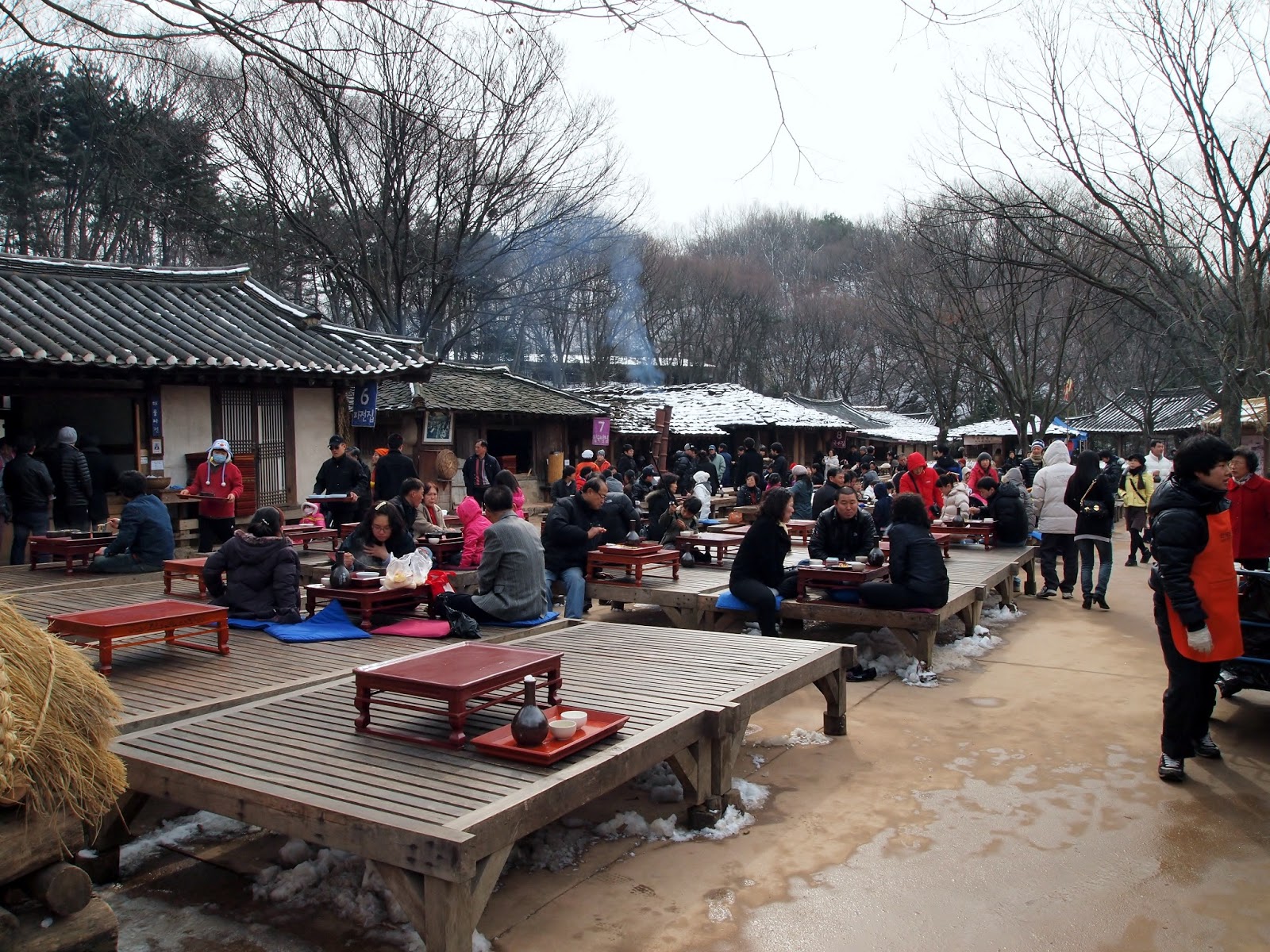
Instead please enjoy some pictures taken from our time in Korea around the holiday of Seollal (we visited the Korean Folk Village):






The following pictures were taken in Busan a couple of weeks into the New Year. The bonfire is celebrating Daeboreum, or the first full moon of the New Year.  When we waited in line to watch this we had no idea what we were in for.  The bonfire was extremely intense with ash and cinders flying all over the place.  The whole ceremony took several hours and included speeches from dignitaries, singing, some very beautiful traditional dancing, and much prayer and excitement when the Full Moon finally rose...


Thanks for indulging me in a little trip back to our wonderful time in Korea.

Next time, we'll see what's happening for breakfast in Italy!


Sunday, 10 February 2013

Week 23 - Egypt

FUL MEDAMES

Ful Medames may be the most ancient breakfast I've come across.  A simple dish made by stewing fava beans, olive oil, garlic, lemon juice, onion and parsley, evidence of man eating a version of this have been discovered in Neolithic ruins!  (That's from as far as back as 10,000 BC.)  Whoa.

It was also one of the most surprisingly tasty breakfasts I've made.  Some, like the upcoming Bomboloni donut from Italy I expect to love.  Mashed beans with garlic and onion?  I wasn't expecting much.  But apparently, thousands of years of history and millions of people across several countries, (Ful Medames is enjoyed not only in Egypt but in Sudan, Eritrea, Ethiopia, Saudi Arabia, Syria, Somalia, etc.) aren't wrong.  Simply put - Ful Medames was delicious.

There's a lot to be said about the history of Ful Medames - apparently the fires that kept the bath waters of ancient Egypt warm also did double duty cooking breakfast for the citizens.  But I'm no Egyptologist, so let's just get to the actual food.

 Ful Medames is a dish that traditionally takes hours and hours to simmer away in a pot.  But I cheated by using a can of Ful I had purchased from the amazing ARZ Fine Foods Grocery store in Toronto.  Preparing the Ful Medames was as simple as sauteeing the garlic and onion until soft, adding the beans to simmer until hot, and then slightly mashing everything together.  The final product was garnished with lemon juice, olive oil and parsley and served with pita and a Mediterranean salad.


It didn't look the prettiest but was quite addictive.  We polished off the whole recipe and since then I've found myself wishing I had more...


For Ease of Preparation:


For Degree of Separation:


For Guestability:


"Come and get it!  I cooked you up some beans 'n garlic!"  Maybe not.

For Sustainability:


This would get a perfect five except it's addictive quality just left me wanting more.

For Overall Appeal:


Ful Medames deserves it's long-standing popularity.  Not only did it taste great, I suspect it was also highly nutritious.  Nutritious, delicious, and ease to prepare - it's the breakfast cook's Triple Crown.

As many of you know today is the first day of the Lunar New Year.  Happy Year of the Water Snake!  To celebrate, I'm working on a special edition all about Seollal - South Korea's lunar year festivities.

Friday, 1 February 2013

Week 22 - Jamaica

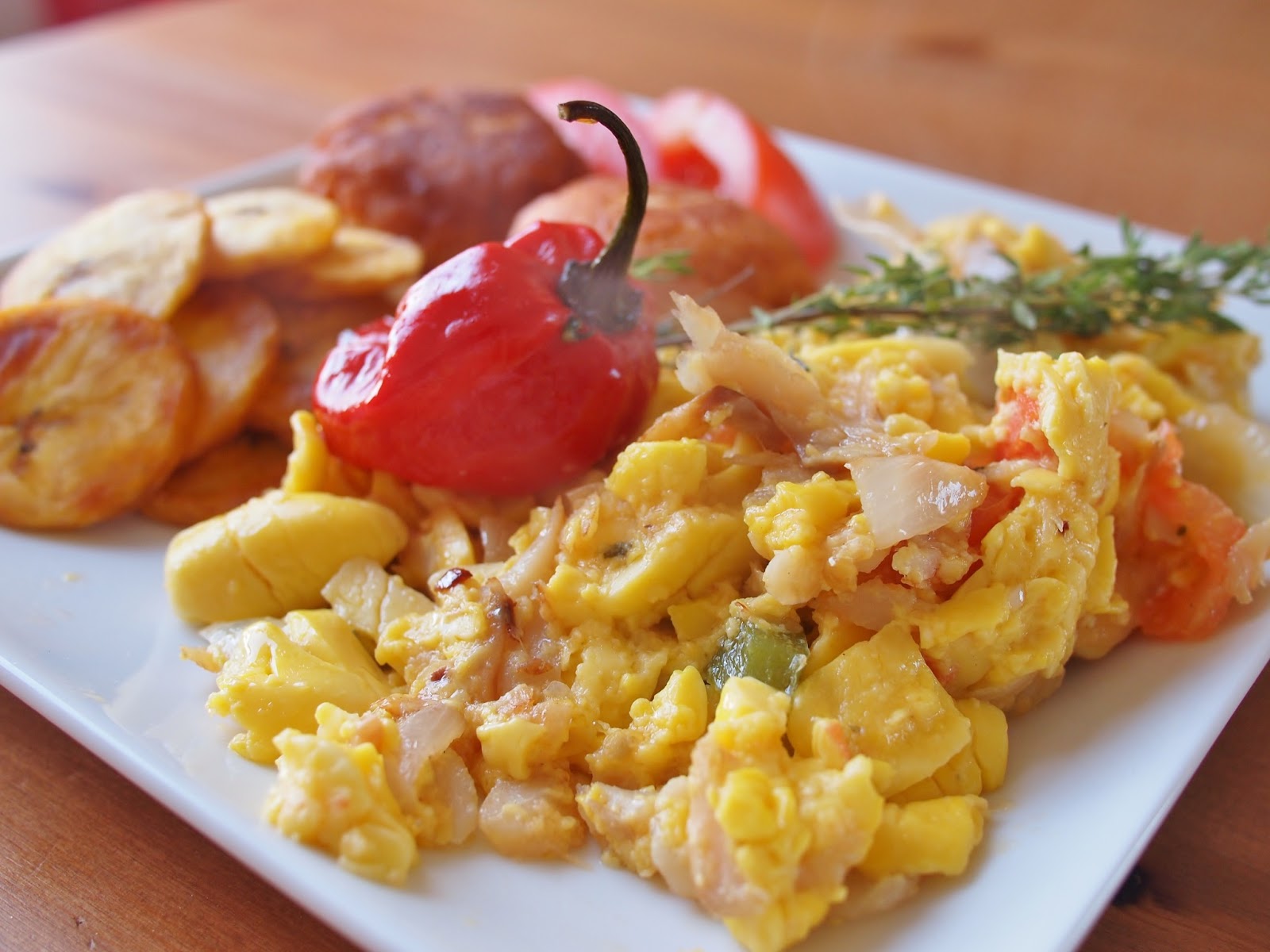
ACKEE and SALTFISH with FRIED PLANTAINS and JOHNNY CAKES

Researching breakfast can sometimes be a difficult task - not a lot is often written on the subject.  Not so for Jamaica where their typical Sunday breakfast is actually the national dish of the country!

I've long been interested in Caribbean cuisine, it has such a great mix of cultures (English, Portuguese, Chinese, Indian, Central American) brought together with each islands' unique style.

Ackee and Saltfish is a dish I'd definitely heard of before, but only really understood in the abstract.  I mean what the heck is an Ackee?  Is it meat, vegetable, mineral?  The little picture on the cans I've seen at the grocery store did nothing to help solve this mystery.  Here's what wikipedia had to say:

It is related to the lychee and the longan, and is an evergreen tree that grows about 10 metres tall, with a short trunk and a dense crown.  The fruit is pear-shaped. When it ripens, it turns from green to a bright red to yellow-orange, and splits open to reveal three large, shiny black seeds, surrounded by soft, creamy or spongy, white to yellow flesh—arilli.

So it's a fruit....that's served with Saltfish....for breakfast. Sounds like a great
Sunday morning adventure.

Making up Ackee and Saltfish was actually quite labour intensive.  The Saltfish had to be boiled and carefully shredded (avoiding any nasty little bones); the myriad of ingredients (ackee, tomato, onion, bell pepper, scotch bonnet pepper, thyme, scallions, garlic) had to be chopped and prepared; and finally everything had to be lovingly stir-fried in an exacting order.  Add to all of this the prep of the side dishes (fried plantains and fried dumplings called Johnny cakes) and you've got quite a lot going on.  But when it was all complete, it created quite the colourful breakfast.


I have a confession - I hate fish.  For my family and friends that's not much of a secret, in fact Jon was astounded when I announced we would be having saltfish for breakfast.  So, I didn't like Ackee and Saltfish at all.  (Fish doesn't get much fishier than saltfish).  But that doesn't mean I couldn't appreciate it.  It was certainly flavourful - spicy, fishy, with that very Caribbean hit of thyme.  And the ackee turns out to be almost like an avocado in taste and texture.  It was creamy and soft and great at taking on the flavours of the rest of the dish.  For all those fish-lovers out there I'd recommend this breakfast - Jon gave it a thumbs up.


For Ease of Preparation:


Boiling fish first thing in the morning is not so fun.

For Degree of Separation:


It's sort of like eggs and bacon, I guess....

For Guestability:


I'm going to try to put aside my dislike of fish here for breakfast-science.

For Sustainability:


For Overall Appeal:


While not my favourite taste-wise, this was a fun breakfast to make and delightful to look at.

For something completely different, next week we'll be heading to Egypt!

Monday, 7 January 2013

Week 21 - Déjeuner - Belgium

COUGNOU and CHOCOLAT CHAUD

For our sweet Christmas morning breakfast we head to Belgium.  Now contrary to popular belief, Belgian Waffles are not the breakfast of choice in Belgium  (disappointing I know.)  Actually most people start their day with some bread with  jam or cheese.  And for Christmas, they indulge in Bread of Jesus or Cougnou, a special sweet bread formed in the shape of the infant Jesus.

Cougnou, like so many other regional foods, can be spelled many ways - Coquille, Cougnolle, Queniolle, Volaeren.   It just depends on what part of Belgium and France you're in.  It's popular with children and is most often served with Hot Chocolate.  No Nesquik Hot Chocolate mind you, real Belgian Hot Chocolate.  Mmmmm....


The Cougnou weren't difficult to make, just time consuming.  To have these ready to eat at a reasonable hour required an early 6 am wake up call.  But for a special Christmas treat it was worth it.  The bread was rich and when spread with some butter a delicious simple sweet treat.  (Warning:  raisin haters, watch out!  This breakfast is chock full of them.)


The star ingredient, which isn't all the familiar to North American bakers, was Pearl Sugar.  Also called Nib Sugar, Pearl Sugar is used across Northern Europe.  It looks like you might imagine (like little white pearls) and gives your baking a sweet crunch as it doesn't melt in the oven.  Even in Toronto it was a bit tricky to locate.


Making Belgian Hot Chocolate has definitely changed the way I think about this winter classic.  I used a recipe gleaned straight from Belgium and it contained per one litre of milk - twelve ounces of quality chocolate, with dashes of cinnamon and salt.  That's a high chocolate to milk ratio!  No wonder the kids love it....

The Verdict:

For Ease of Preparation:


Sunday morning at 6 am is not an hour I enjoy seeing....

For Degree of Separation:


For Guestability:


For Sustainability:


I don't expect a lot out of bread in this category, but the Cougnou were surprisingly filling.

For Overall Appeal:


Although delicious, this breakfast is going into the "special occasion with guests" file for me.  It was way too time consuming to happen more than once or twice a year.

Next week we see how they do breakfast in Egypt.  But first I'd like to wish all my Ukrainian family and readers a Merry Christmas - Веселого Різдва і з Новим Роком!

Friday, 28 December 2012

Week 20 - Guatemala

Merry Christmas Eveyone!

Christmas Breakfast is a special meal enjoyed around the world - the belts are not yet too tight from Christmas Dinner and the joy of Santa's arrival is fresh in everyone's mind.  But I suspect, even in North America, everyone has their own private tradition.  Do you eat before gift-opening or after?  Do you just scarf down some cold cereal or have a leisurely hot brunch?  In my family Christmas Breakfast was most often celebrated with a rich meal of bacon, eggs and pancakes eaten before gift-opening but after we'd delved into our stockings.

With all this in mind I was eager to delve into the rich traditions enjoyed around the world.  Unfortunately for me, there were not enough mornings to try everything out.  So after much thought I narrowed it down to two completely different traditions.  One European, one Central American.  One sweet, and one savoury.

Part One - Guatemala

TAMALE NEGRO

The country of Guatemala is around 50-60% Roman Catholic and Christmas is one of their major holidays.  Celebrations include Christmas Mass, decorations, fireworks (!), and lots of tamale-making.  Similar to the Chinese tradition of dumpling making for the Chinese New Year, Guatemalans take advantage of the extra time and family (aka free labour) to make lots and lots of the time-consuming tamale.


Before eating Nicaraguan breakfast, the Nacatamale, I had never really eaten a Tamale before.  And I'm guessing unless you've been to Central America, you might not have either.  Here's a short-description:

"A dish containing Masa (corn-based dough) which is steamed or boiled in either Banana Leaves or Corn Husks.  It can be filled with any number of sauces, meats, cheeses, or vegetables."

Now of course, Tamales are eaten all year round in Guatemala, but for Christmas they make a special one called Tamales Negro (or Black Tamales).    I'm not sure of the significance of this Tamale, except perhaps that it's sauce is chocolate-based and together with toppings like raisins and plums this Tamale is just a little bit sweet (and hence, suitable for Christmas morning).

People were not kidding when they described Tamales as time-consuming.  Even with Jon's generous help, this breakfast probably took close to 5-6 hours to prepare.  We began in the evening, preparing the dough, sauce and fillings, and assembling the Tamales.  This left only the 90 minute steaming process for the morning.

The dough we prepared with the classic Maseca mix, lots of butter, sugar and some water on the stovetop.


Here it is after being kneaded into a nice dough.  It's warm, soft, and tastes like ground up tortillas.


The filling was a bit more tricky.  It was made from scratch with pumpkin seeds (pepitas), sesame seeds, chili peppers, tomatoes, bittersweet chocolate, pork and a few spices.  The seeds had to be roasted, the chili peppers rehydrated and roasted, the chocolate melted and everything blended into a smooth sauce.  Once that was complete we added the pork (which we had already cooked).

Next we had to deal with the Banana Leaves.  We had bought a huge pack frozen from Kensington Market but really had no idea how to use them.  We did our research and saw that to prevent from breakage it helps to boil frozen banana leaves before use.  So we tried that and our apartment promptly smelt like banana tea! The leaves did seem more pliable but breakage was definitely still an issue.  Good thing the pack came with 200 feet of banana leaves...


To pack a tamale:  clear a nice space, lay down your banana leaf, top with around one cup of Masa, squish firmly to around 1/4 inch, place your toppings (raisins, olives, plums, etc).   Now ladle one spoonful of the sauce and carefully lift the edges of the tamale toward the middle to seal the filling into the Masa.  Here comes the tricky part:  without breaking the banana leaf, fold it into a neat package and tie with some string to secure.  Sounds easy, looks easy on-line, but is not easy in person!


In the morning we simply steamed the tamales for around 90 minutes, opened and enjoyed.  Well, Jon enjoyed.  Me not so much.  Which was highly disappointing after all that effort.  The sauce tasted okay and the pork was definitely tender.  I think it was the Masa which I didn't like.  It had taken on flavour from the banana leaves (which I think is probably the point) and I just didn't dig it.  It tasted a lot like green bananas, which is a flavour I usually like, just not mixed with corn and pork...


The Verdict:

For Ease of Preparation:


Not easy.

For Degree of Separation:


If I could give this six Cheerios I would.


For Guestability:


Very subjective, Tamale breakfast could be fun.

For Sustainability:


For Overall Appeal:


I would be willing to try Tamales again - the process was fun and they might be great to serve at a dinner party.  I would just vary it up - maybe try it with corn husks and a different filling.  Really when you think about it, the combinations could be endless:  Trini Curry Tamales, General Tsao Tamales, Thai Green Curry Tamales, Iranian Fesenjan Tamales....

Next Breakfast we eat the baby Jesus in bread-form!